
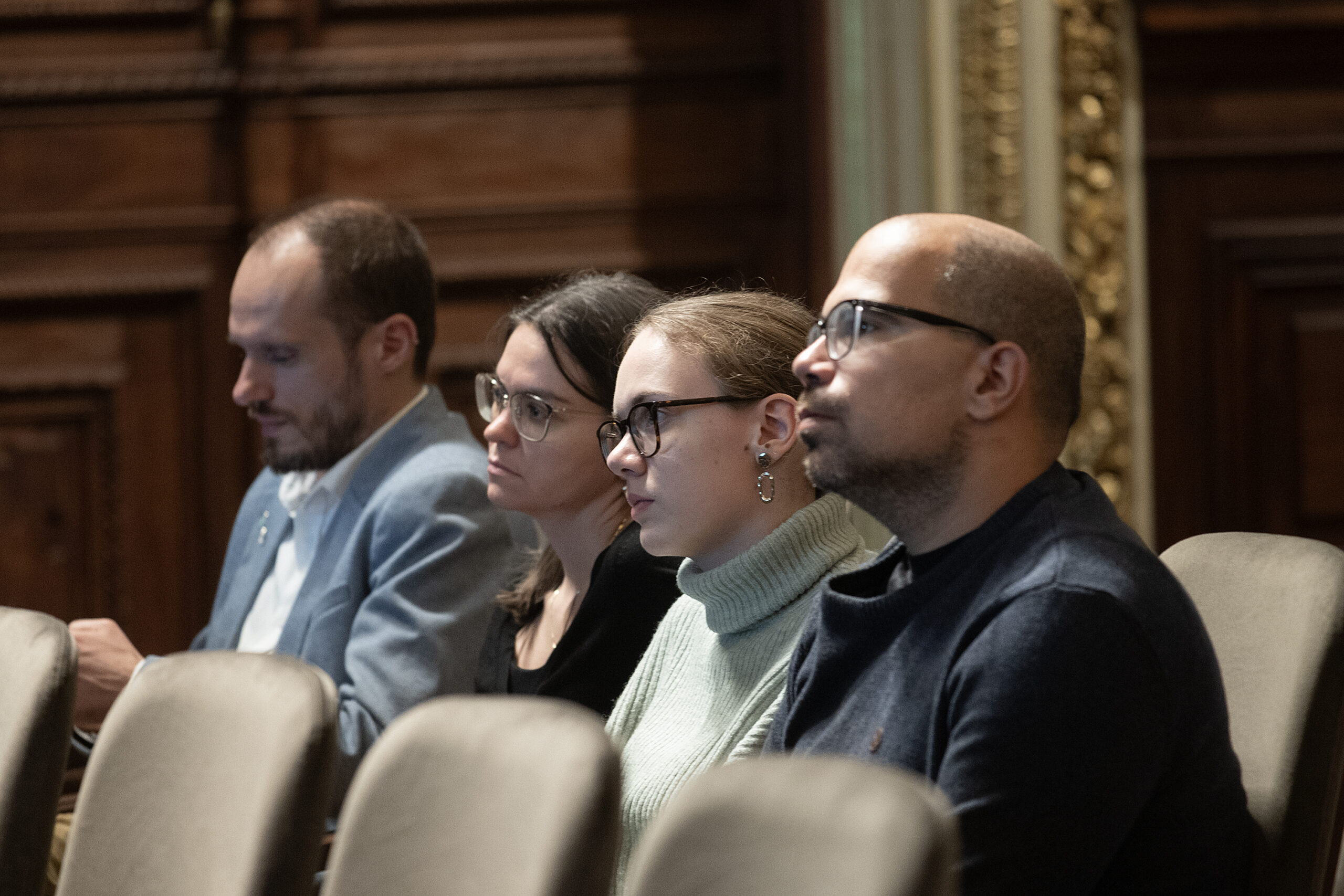
Following the exciting morning programme of the Hungarian Young Academy (“Multidisciplinary Research, or How Research Fields Find Each Other” – summary), the afternoon presentations showcased the diversity of research activities carried out by the HYA membership.
In his presentation, chemist Tamás Beke-Somfai explained how he went from theoretical chemical calculations to successfully creating a tiny protein molecule (peptide) that can destroy certain bacteria by organizing itself, thus providing a promising basis for new types of antimicrobial solutions.
Data scientist Ákos Lencsés talked about how “data science” has become a profession in its own right: that is, he let the audience in on the work of background specialists who, instead of and alongside researchers, organize, store, document, and make research data reusable, and how a training system and national network have been developed for this in Hungary.
Geologist Réka Haranginé Lukács showed how the rocks and minerals (e.g. zircon) from Hungary’s now-dormant volcanoes, which act as “time capsules,” can be used to determine whether their former magma chambers still exist in the depth of the Earth and could pose a volcanic risk in the future.
Plant biologist Zsuzsanna Ördögné Kolbert provided insight into how environmentally friendly methods – plasma-activated water and biodegradable “nano-capsule” materials – can be used to make crops more resistant to drought and disease by pre-treating seeds or young plants.
Mathematician Péter Pál Pach used the card game called “Set” to illustrate how algebraic methods (especially the slice rank method) can be used to solve combinatorial problems in which certain patterns, such as straight lines or arithmetic sequences, must be excluded from large sets.
According to research by sociologist Ivett Szalma, concern about climate change is strong in Hungary, but it does not significantly influence decisions about having children, and technological-economic framing and the issue of political responsibility are more prominent in men’s narratives.
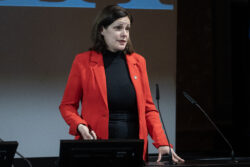
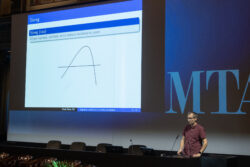
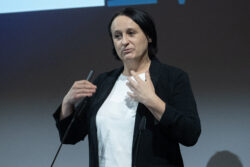
Oncologist Dávid László Tárnoki outlined how artificial intelligence helps radiologists in their work (e.g. in the early detection of tumors and the analysis of images) and how it is used in combination with twin studies to understand the way genetics and the environment together influence the development of cancer.
Chemical engineer Andrea Toldy talked about how epoxy-based polymer composites — especially flame-retardant, even recyclable systems — can be used to develop lighter, safer, and more sustainable structural materials for aircraft and wind turbines.
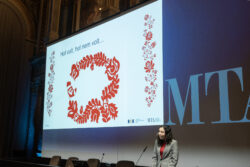
Research physician Imola Wilhelm presented her research in the form of a fairy tale: tumor cells that arrive as “good friends” send tiny “magic letters” – extracellular vesicles – to the endothelial cells lining the blood vessels in the brain, causing them to malfunction, weakening the blood-brain barrier and allowing metastatic cancer cells to pass through. Her research team’s goal is to uncover these molecular tricks so that the development of brain metastases can be prevented in the future.
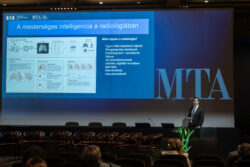
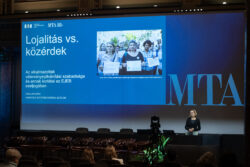
Legal scholar Sára Hungler pointed out that employees – especially teachers and judges – are entitled to strong protection for their good-faith criticism of matters of public interest on the basis of the freedom of expression. According to her analysis, the immediate dismissal of Hungarian teachers protesting through civil disobedience was a disproportionate sanction, as they were drawing attention to real problems in the interests of their students.
Psychologist András Zsidó N.‘s research examines how frightening stimuli capture and distort our attention, what kind of rapid neurological and physiological reactions they trigger, and how all this can help us better understand anxiety and phobias.
Finally, physicist Georgina Fröhlich talked about how medicine — especially radiation therapy — uses atomic and nuclear physics for targeted, personalized irradiation of tumors (tele- and brachytherapy), how doses are calculated and combined, and she also explained the key role clinical radiation physicists play in this process — from quality assurance to the application of artificial intelligence.
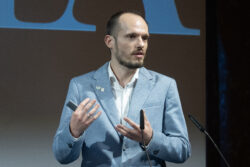
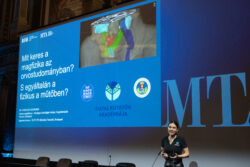
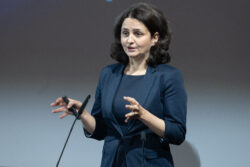
As Bernadette Kun, HYA Co-chair and moderator of the block, emphasized, these talks not only showcased individual scientific achievements, but also indicated the direction in which the new generation of young researchers in Hungary is heading.
The afternoon thus offered not only presentations, but also a kind of scientific panorama: laboratories, databases, archaeometric studies, psychological research, and engineering innovations were all given space. It became clear to the audience that the diversity of young researchers is a valuable asset and that the Hungarian Young Academy is a community that can make this strength visible, and turn it to the benefit of Hungarian science as a whole.
Photo gallery of the event (Photos: mta.hu / Tamás Szigeti)